
Updated September 2026
How to Play Tomb Raider: Legacy of Atlantis
Legacy of Atlantis wants you to feel like Lara Croft at the top of her game, then refuses to draw a yellow line on the floor. This page is the first-hour operating manual: how a session is supposed to flow, which settings exist, and when to stop wandering.
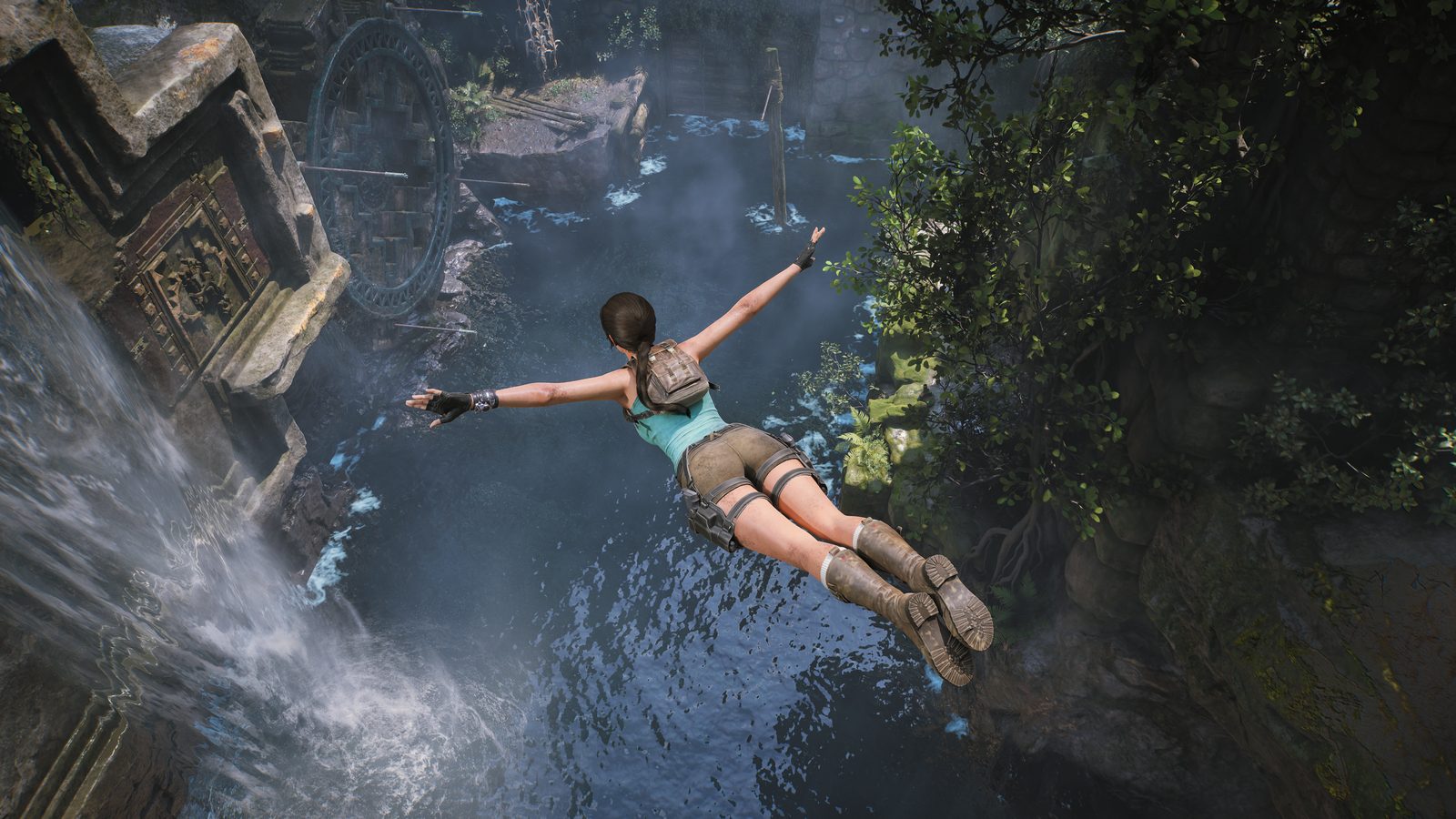
The loop: look, move, solve, then shoot
A typical Peru room does not start with a gunfight. It starts with a broken machine and a missing piece. You search, climb, dive, and grapple until the world answers. Combat is the punctuation, not the sentence. Raul Siqueira has said the original design is slower than modern action games on purpose. If you sprint past murals you will miss both lore and the cog that was never going to sparkle.
When you do fight, keep moving. Hold fire, tighten aim when you can spare a thumb, cartwheel off lunges, and spend Focus when a pack collapses space. Then go back to being an archaeologist. That swing between stillness and flourish is the game. The controls page maps the buttons; this page tells you why they are in that order.
Settings that change the fantasy
Preview builds offered independent sliders for overall difficulty, puzzles, combat, and traversal, plus optional scanner hints and extra guidance. Use them without apology. A player who wants Qualopec's tomb to feel like a logic exam can raise puzzles and drop combat. A player who wants raptor ballet can do the inverse. None of that flags you as a lesser Croft. The developers said they do not want the impression that this is a brutal game even while they keep lethal traps in the mix.

Tools you actually have
Wrist grapple for gaps, pulls, and some puzzle tugs. Climbing axe as a Survivor-era echo that still bites into vines and, in some encounters, into attacks. Scanner for optional clues and lore. Dual pistols as the only guns that are truly hers — Conrad Roth's gift, according to Jeff Adams — while shotgun, SMG, and rifle are world pickups. Artifacts buy skills. Herbs become food. Details live on the gear, weapons, and herb pages. In the first hour you only need to remember: explore before you craft, and craft before you get proud.
A practical first session
Spend the opening valley learning to read water. Solve the regulator without opening a guide if you can. If twenty minutes pass and the second cog is still a rumor, scan once. After the door, treat raptors as a movement exam: Circle to live, R1 to punish. When the T-Rex starts the chase, stop thinking about loot. After you survive, dump artifacts into whatever skill reduces panic — healing or damage reduction are the ones developers mentioned out loud — then leave Peru toward the full Peru walkthrough if you want room-level notes, or jump to puzzles if the cogs felt like luck.
Keep reading
- How to use Focus
The combat flourish that also keeps you alive.
- How to solve puzzles
Cogs, quipus, beams, and optional hints.
- How to traverse
Grapple, poles, axe, and cinematic jumps.
- How to beat dinosaurs
Raptors, packs, and the T-Rex chase.
Frequently asked questions
Is this harder than the Survivor trilogy? +
It is slower and less directed. Instant-death 1996 sadism is being tuned for modern taste, but traps still kill. Sliders exist so you can choose the mix.
Should I play with a controller on PC? +
Steam lists full controller support and recommends one. The PlayStation preview mapping is the reference on our controls page.
Can I ignore the skill tree? +
You can finish with dual pistols. Skills still make fights shorter and mistakes cheaper. Artifacts are the cost, not a grind bar.
What is the first thing to upgrade? +
Whatever helps you stay in motion: healing, damage reduction, or a traversal comfort node if the tree offers one. Exact node names wait for launch.